Address
304 North Cardinal St.
Dorchester Center, MA 02124
Work Hours
Monday to Friday: 7AM - 7PM
Weekend: 10AM - 5PM
Address
304 North Cardinal St.
Dorchester Center, MA 02124
Work Hours
Monday to Friday: 7AM - 7PM
Weekend: 10AM - 5PM

Europe Legit Psychedelic Shop
Price range: €95.00 through €375.00
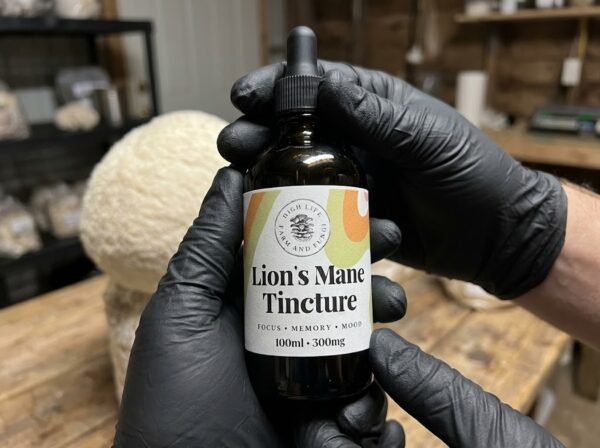
Lion’s Mane extract tincture is a liquid dietary supplement made from Hericium erinaceus, an edible medicinal mushroom also known as lion’s mane, yamabushitake, or monkey-head mushroom. Tinctures are typically concentrated extracts suspended in a liquid such as water, glycerin, or alcohol and are taken in measured drops.
Lion’s mane is particularly well known for research into cognitive function, memory, mood, nerve-growth pathways, and gut health. However, human evidence is still developing, and lion’s mane should be regarded as a dietary supplement rather than a proven treatment for neurological or other diseases.
Lion’s mane is the common name for Hericium erinaceus, a distinctive white mushroom with long, hanging spines. It has traditionally been eaten as food and used in East Asian health practices.
Modern supplements are available in several forms:
The mushroom contains several potentially bioactive compounds, including polysaccharides, phenolic compounds, hericenones, erinacines, sterols and other secondary metabolites.
A tincture is essentially a liquid extract designed to make supplementation convenient.
Depending on the manufacturing process, the extraction liquid may be:
A product described as a dual extract generally means that more than one extraction method has been used to obtain different groups of mushroom compounds.
It is important to look beyond the word “tincture” on a label. The concentration, extraction method, mushroom material used, and testing standards can vary considerably between products.
One important distinction when evaluating a tincture is which part of the mushroom was used.
The fruiting body is the visible mushroom structure. Fruiting-body products can contain polysaccharides and other compounds associated with the mushroom.
Mycelium is the network of fungal filaments from which the mushroom develops. Research has particularly investigated erinacine compounds in mycelium.
For example, a 2024 randomized, double-blind pilot study investigated an erinacine-A-enriched H. erinaceus preparation and reported improvements in certain cognitive measures after eight weeks. The study was small, involving 33 participants who completed the intervention, so the findings should be interpreted cautiously.
Consequently, simply seeing “lion’s mane” on a bottle doesn’t tell you exactly what compounds or concentrations you’re getting.
Cognitive health is one of the most heavily researched areas involving lion’s mane.
A systematic review published in 2025 examined five randomized controlled trials along with other clinical and laboratory research. The authors found signals of potential cognitive benefits, but the overall evidence base remains limited and heterogeneous.
An earlier randomized controlled trial involving older adults with mild cognitive impairment reported improved cognitive-function scores during 16 weeks of lion’s mane supplementation compared with placebo. The improvements decreased after supplementation stopped, suggesting that continued intake may have been important in that particular study.
Lion’s mane is frequently marketed for memory support.
Laboratory research has investigated compounds from H. erinaceus that may influence pathways associated with nerve growth factor (NGF) and other neurotrophic signaling. However, promising laboratory mechanisms do not automatically demonstrate that a commercial tincture will improve memory in healthy people.
Researchers have investigated lion’s mane because compounds such as hericenones and erinacines appear to interact with neurotrophic pathways in preclinical studies.
These compounds have been investigated for effects involving:
Much of this evidence comes from laboratory and animal research, so it should not be interpreted as proof that lion’s mane treats neurological disease in humans.
Some human research has examined lion’s mane in relation to mood and subjective stress.
The evidence is promising but preliminary. A recent systematic review identified research involving depression, anxiety and stress, while also emphasizing the limitations of the available evidence.
Lion’s mane has also been investigated for potential effects on the gut microbiome.
Some clinical research has reported changes in gut-microbiota diversity following supplementation. A 2024 pilot study, for example, reported increased microbiota diversity alongside other findings in participants taking an erinacine-A-enriched preparation.
This is an emerging area of research rather than an established medical use.
It is useful to separate scientific evidence from supplement marketing.
| Area | Current evidence |
|---|---|
| Cognitive function | Promising but limited human evidence |
| Memory | Some positive clinical findings |
| Mood/stress | Preliminary evidence |
| Nerve-growth pathways | Stronger laboratory evidence |
| Gut microbiome | Emerging research |
| Alzheimer’s disease | Small clinical studies; not an established treatment |
| Cancer treatment | Laboratory findings do not establish a human treatment benefit |
| General wellness | Reasonable as a food/supplement, but specific benefits aren’t guaranteed |
A 2020 pilot study involving people with mild Alzheimer’s disease reported some favorable cognitive and functional outcomes from an erinacine-A-enriched mycelial preparation, but the study was relatively small and is not sufficient to establish lion’s mane as an Alzheimer’s treatment.
Liquid extracts are commonly supplied with a dropper.
A manufacturer may instruct users to measure a particular number of drops or milliliters per serving. Because tinctures can have dramatically different concentrations, there isn’t a single universal “lion’s mane tincture dose.”
The safest approach is to:
Clinical studies have used different preparations and quantities, meaning study doses cannot automatically be converted into a recommendation for a particular commercial tincture.
When comparing products, consider transparency rather than marketing claims.
Clearly identified species:
The label should identify Hericium erinaceus.
Plant/mushroom material:
Ideally, the manufacturer should state whether the extract comes from fruiting body, mycelium, or both.
Extraction information:
A transparent manufacturer should explain the extraction process.
Extract concentration:
Look for actual quantities rather than vague claims such as “high potency.”
Third-party testing:
Independent testing can help verify identity, purity and contamination controls.
Batch information:
Lot or batch numbers make products easier to trace.
Minimal unnecessary ingredients:
A simple ingredient list can make it easier to understand exactly what you’re consuming.
Alcohol can act as an extraction solvent and is commonly used in traditional tincture manufacturing.
Advantages can include:
However, alcohol content may matter to people who avoid alcohol.
Glycerin-based products are often marketed as alcohol-free alternatives.
They can be convenient for people who don’t want alcohol in a supplement, although the extraction characteristics differ from an alcohol extraction.
Hot-water extraction is particularly relevant for mushroom polysaccharides and is widely used in mushroom supplement manufacturing.
There is no universal rule that one extraction method is automatically “best.” What matters is whether the manufacturer clearly explains the extraction process and provides meaningful information about the resulting product.
Lion’s mane is generally considered well tolerated when consumed as food, but supplements can produce side effects.
Reported or possible reactions include:
Memorial Sloan Kettering notes abdominal discomfort, nausea and skin rash among reported adverse effects.
Anyone who develops symptoms suggesting an allergic reaction should stop taking the product and seek appropriate medical attention.
People who are:
should discuss supplementation with a healthcare professional before using concentrated lion’s mane extracts.
This is particularly relevant because dietary supplements can differ substantially from ordinary culinary quantities of mushrooms.
Advantages:
Potential disadvantages:
Advantages:
Potential disadvantages:
Neither form should automatically be assumed to be more effective simply because it is a tincture or capsule.
It is better to think of lion’s mane as a potentially supportive dietary supplement rather than a fast-acting cognitive enhancer.
Research has investigated effects over periods ranging from single doses to many weeks or months. A 2026 preprint involving 109 adults aged 40–75 with self-reported cognitive difficulties reported modest improvements in some attention, working-memory, sleep-quality and mood measures after eight weeks of supplementation. Importantly, this study was posted as a preprint and therefore had not yet undergone standard peer review at the time of the source’s publication.
That distinction is important when evaluating claims made about lion’s mane products.
Lion’s mane appears generally well tolerated for many people, but side effects including gastrointestinal symptoms and skin reactions have been reported. Concentrated supplements should not automatically be treated as equivalent to eating the mushroom as food.
Some clinical trials have reported improvements in cognitive measures, particularly in people with mild cognitive impairment, but the evidence is not yet strong enough to guarantee a memory benefit for everyone.
No. Lion’s mane is being investigated for potential cognitive and neurological effects, but it is not an established treatment for Alzheimer’s disease. Existing studies are relatively small and use specific preparations that may not be equivalent to commercial tinctures.
Not necessarily. Tinctures and powders are different delivery formats. Their effects depend on the mushroom material, extraction process, concentration and quality of the finished product.
There isn’t a scientifically established universal timeframe. Human studies have used different schedules, with some investigating effects over several weeks or longer. Individual responses can also vary.
Lion’s Mane extract tinctures provide a convenient liquid form of Hericium erinaceus and are increasingly used as dietary supplements for cognitive and general wellness purposes. Research has produced interesting findings involving cognition, neurotrophic pathways, mood and gut microbiota, but many of the strongest mechanistic findings remain preclinical, while human trials are generally small and use different preparations.
| Quantity and Prices | 1 Bottle Of 100ml-300mg, 2 Bottles Of 100ml-300mg, 4 Bottles Of 100ml-300mg, 5 Bottles Of 100ml-300mg |
|---|
Reviews
There are no reviews yet.