Address
304 North Cardinal St.
Dorchester Center, MA 02124
Work Hours
Monday to Friday: 7AM - 7PM
Weekend: 10AM - 5PM
Address
304 North Cardinal St.
Dorchester Center, MA 02124
Work Hours
Monday to Friday: 7AM - 7PM
Weekend: 10AM - 5PM

Europe Legit Psychedelic Shop
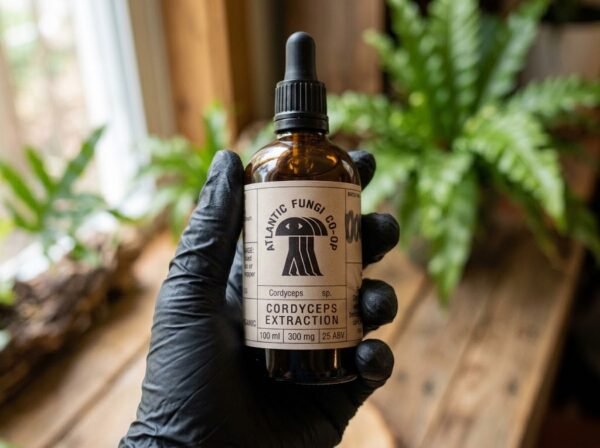
Price range: €90.00 through €400.00
A Cordyceps tincture is a concentrated liquid extract made from Cordyceps mushrooms, commonly Cordyceps militaris or products labeled as Cordyceps sinensis/Ophiocordyceps sinensis.
“Triple tincture” is not a standardized medical term. Depending on the manufacturer, it can mean a product using three extraction methods, three extraction stages, or a blend involving multiple Cordyceps preparations. Therefore, the exact meaning should be confirmed from the product’s label.
Cordyceps supplements are commonly marketed for energy, stamina, exercise performance, immune support, and general wellness, but the strength of evidence varies considerably. Memorial Sloan Kettering notes that human studies of exercise performance have produced mixed results.
Depending on the formulation, a tincture may contain:
The exact chemical profile depends heavily on the species, growing method, mushroom material used, extraction process, concentration, and storage conditions.
Mushrooms contain many different compounds, and different solvents can extract different groups of compounds.
A manufacturer might therefore use multiple extraction approaches—for example:
Hot-water extraction → alcohol extraction → concentration/blending
The idea is to obtain a broader range of mushroom constituents than would be obtained using one extraction method alone.
However, “triple extracted” does not automatically mean three times stronger or clinically more effective. What matters more is the actual species, extraction ratio, standardized compounds, concentration and independent quality testing.
Cordyceps is traditionally associated with stamina and physical performance. Some human research has investigated exercise-related outcomes, but results have not been consistent enough to establish Cordyceps as a proven performance-enhancing treatment.
Cordyceps has demonstrated effects on immune-related pathways in laboratory research. However, laboratory findings shouldn’t automatically be interpreted as proof that a Cordyceps tincture prevents or treats infections in humans.
Cordyceps may lower blood glucose, which could be relevant for people taking insulin or other glucose-lowering medication. This is one reason medical advice is particularly important when combining Cordyceps with diabetes medication.
Cordyceps has been studied in certain kidney-related conditions, but available clinical evidence remains insufficient for establishing it as an effective treatment.
Laboratory research has investigated Cordyceps compounds for antioxidant, anti-inflammatory and other biological effects. These findings are interesting scientifically, but laboratory or animal research isn’t equivalent to demonstrated clinical benefits in humans.
No.
Cordyceps is not generally considered a psychedelic mushroom and should not be confused with psilocybin-containing mushrooms.
A Cordyceps tincture shouldn’t be expected to produce hallucinations, psychedelic visuals, or a conventional psychedelic “trip.”
Commercial products normally provide their own serving instructions, typically measured using a dropper.
Because tinctures vary substantially in concentration, extraction ratio and formulation, there isn’t a single scientifically established “Cordyceps triple tincture dose” that applies to every product.
The safest approach is to follow the manufacturer’s labeled serving size rather than assuming that one tincture has the same concentration as another.
Cordyceps is generally discussed as having relatively few major reported adverse effects, but that doesn’t mean every Cordyceps product is risk-free.
Potential concerns include:
MSK specifically advises caution with blood-thinning medication because Cordyceps may increase bleeding risk, and with insulin or other glucose-lowering medicines because Cordyceps may further lower blood sugar.
People who are pregnant or breastfeeding, children, people preparing for surgery, and people taking prescription medications should discuss supplementation with a healthcare professional because many dietary supplements haven’t been adequately studied in these populations.
A quality-focused product should clearly identify:
1. Mushroom species
Look for a scientific name such as Cordyceps militaris rather than simply “mushroom blend.”
2. Mushroom material
Check whether the product uses fruiting bodies, mycelium, or both.
3. Extraction method
The label should explain whether it is water extracted, alcohol extracted, dual extracted, or otherwise processed.
4. Extraction ratio
For example, a manufacturer might state a ratio such as 8:1 or 10:1. This should not automatically be interpreted as equivalent to clinical potency.
5. Beta-glucan content
A transparent manufacturer may provide laboratory measurements of beta-glucans.
6. Cordycepin content
For C. militaris, some manufacturers provide a cordycepin measurement. This can be more informative than simply claiming that the product is “high strength.”
7. Third-party testing
Independent testing for identity, heavy metals, pesticides, microbes and contaminants is a useful quality indicator.
NCCIH warns that supplements can differ from products used in research and that contamination, inaccurate labeling and interactions with medications are important considerations.
| Feature | Triple tincture | Powder | Capsules |
|---|---|---|---|
| Form | Liquid | Powder | Encapsulated powder/extract |
| Convenience | Easy to measure | Can require mixing | Very convenient |
| Extraction | Often multiple methods | Depends on processing | Depends on contents |
| Absorption claims | Highly product-dependent | Product-dependent | Product-dependent |
| Taste | May have mushroom/alcohol flavor | Earthy/mushroom flavor | Usually minimal |
| Dose consistency | Depends on dropper/concentration | Usually measured by weight | Usually standardized per capsule |
The important point is that liquid doesn’t automatically mean more bioavailable or more effective.
Not every product marketed as Cordyceps is equivalent.
For example:
Cordyceps militaris
A cultivated species commonly used in modern supplements and studied for compounds including cordycepin.
Ophiocordyceps sinensis
The scientific classification associated with what has historically been called Cordyceps sinensis. Authentic material is considerably different from cultivated C. militaris.
Mycelium products
These contain fungal mycelial material rather than primarily fruiting bodies and can have a different chemical profile.
Consequently, comparing products solely by the word “Cordyceps” can be misleading.
This is particularly important with mushroom supplements.
Claims such as:
should not be accepted simply because they’re printed on a supplement website.
NCCIH emphasizes that evidence for dietary supplements varies substantially and that products sold commercially may differ from those investigated in research.
Cordyceps triple tinctures are concentrated liquid Cordyceps preparations, with “triple tincture” generally referring to a manufacturer’s particular multi-stage or multi-method extraction process rather than an established medical classification. Cordyceps has interesting traditional use and laboratory research behind it, but human evidence for many advertised benefits remains limited or mixed.
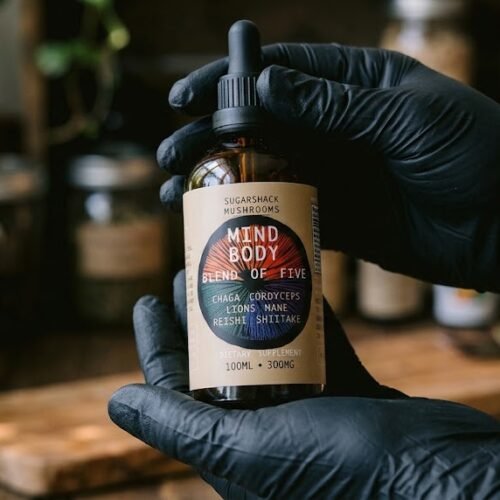
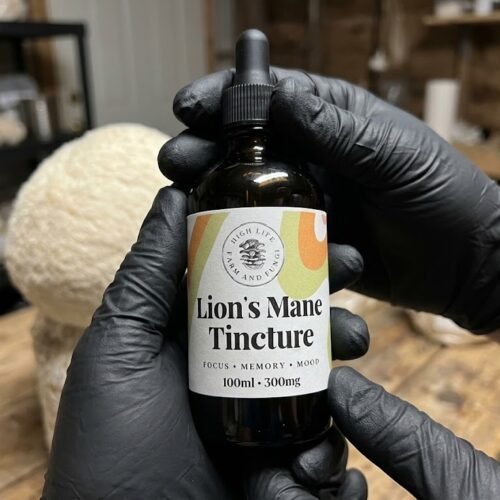
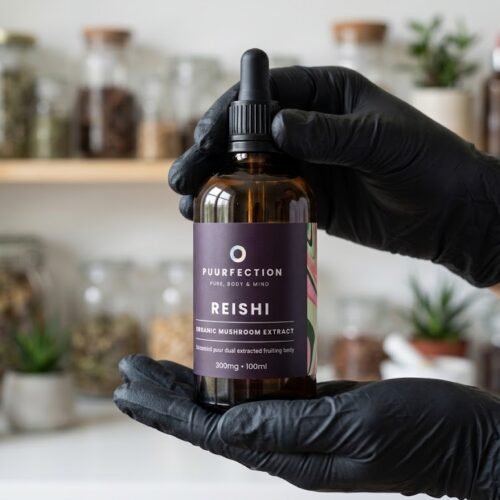
| Quantity And Prices | 1 Bottle of 100ml-300mg, 2 Bottles of 100ml-300mg, 4 Bottles of 100ml-300mg, 5 Bottles of 100ml-300mg |
|---|
Reviews
There are no reviews yet.