Address
304 North Cardinal St.
Dorchester Center, MA 02124
Work Hours
Monday to Friday: 7AM - 7PM
Weekend: 10AM - 5PM
Address
304 North Cardinal St.
Dorchester Center, MA 02124
Work Hours
Monday to Friday: 7AM - 7PM
Weekend: 10AM - 5PM

Europe Legit Psychedelic Shop
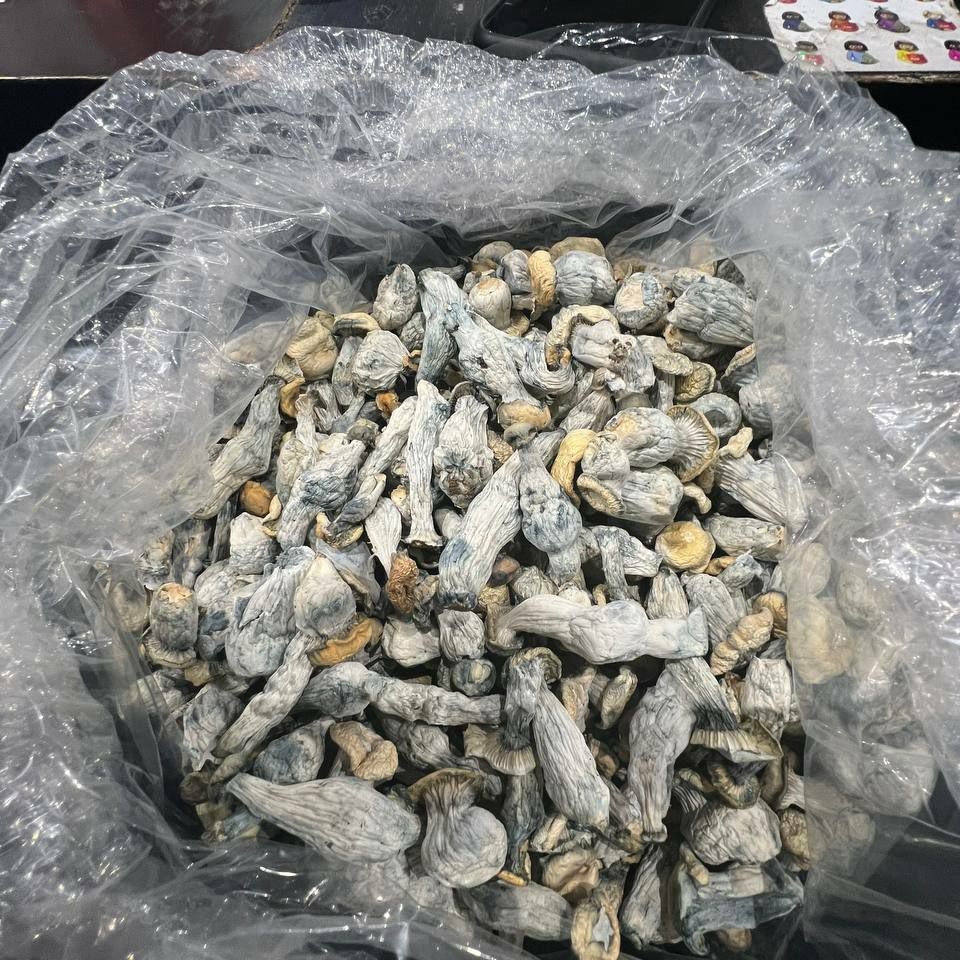
Where To Buy Magic Mushroom Online Ireland? Psilocybin is a naturally occurring psychedelic compound found in over 180 species of mushrooms, commonly known as “magic mushrooms.” For centuries, Indigenous cultures in parts of Central and South America have used these mushrooms in spiritual and ceremonial practices. Today, psilocybin has become the focus of extensive scientific research because of its remarkable effects on consciousness and its potential to treat mental health conditions such as depression, anxiety, post-traumatic stress disorder (PTSD), and substance use disorders.
Unlike many recreational drugs that primarily produce pleasure through dopamine release, psilocybin works by profoundly altering communication between brain regions. It temporarily changes how the brain processes information, emotions, memories, and sensory experiences. These changes can lead to vivid visual experiences, altered perceptions of time and space, emotional breakthroughs, and in some cases, long-lasting improvements in psychological well-being.
Understanding how psilocybin affects the brain requires examining its chemistry, the serotonin system, brain networks, and the lasting biological changes that may occur after its effects wear off. Where To Order Psilocybin Mushroom Ireland ?
Psilocybin is a prodrug, meaning it is biologically inactive until it enters the body.
After ingestion, digestive enzymes rapidly convert psilocybin into psilocin, the compound responsible for its psychoactive effects.
The conversion occurs mainly in the liver and digestive tract through a process called dephosphorylation.
Once converted into psilocin, the molecule enters the bloodstream and crosses the blood-brain barrier, allowing it to interact directly with neurons.
Most effects begin:
The primary target of psilocin is the serotonin system.
Serotonin is a neurotransmitter involved in:
The brain contains many serotonin receptors.
Among them, the 5-HT2A receptor is the most important for psychedelic effects.
Psilocin closely resembles serotonin in chemical structure, allowing it to bind to these receptors.
However, unlike serotonin, psilocin activates these receptors in unusual ways that dramatically alter neuronal communication. Where To Order Psilocybin Mushroom Ireland ?
5-HT2A receptors are concentrated in:
These areas are responsible for:
When psilocin stimulates these receptors:
Neurons become more excitable.
Communication between distant brain regions increases.
Brain networks become less rigid.
Information flows differently than under normal consciousness.
This altered communication creates the unique psychedelic experience. Where to Purchase Magic Mushroom Ireland ?
One of the most important discoveries in psychedelic neuroscience comes from functional MRI (fMRI).
Normally, the brain is organized into specialized networks.
Each network performs particular functions.
Under psilocybin, these boundaries become more flexible.
Researchers often describe this as the brain becoming more globally connected.
Brain regions that rarely communicate suddenly exchange information.
For example:
This increased cross-talk may explain why people experience:
Perhaps the most studied brain system affected by psilocybin is the Default Mode Network (DMN). How can I Purchase Psilocybin Mushroom Ireland ?
The DMN becomes active during:
Major components include:
The DMN helps maintain our ongoing sense of identity.
It supports the inner narrative that tells us:
“I am this person.”
“This happened to me.”
“This is what others think about me.”
Brain scans consistently show that psilocybin reduces synchronized activity within the Default Mode Network. Where to Order Magic Mushroom Ireland ?
As this network temporarily becomes less dominant:
Self-focused thinking decreases.
Rigid thought patterns loosen.
Mental boundaries soften.
Many people report:
This phenomenon is often called ego dissolution.
Rather than completely losing identity, many individuals describe temporarily experiencing consciousness without their usual sense of self.
In disorders like depression, the DMN often becomes overactive.
Patients frequently experience:
Psilocybin appears to interrupt these patterns.
Researchers sometimes compare it to temporarily rebooting certain brain networks.
After the experience, some individuals report:
One influential explanation is the Entropic Brain Theory.
According to this theory:
Normal consciousness is highly ordered.
The brain filters enormous amounts of incoming information.
Only selected information reaches awareness.
Psilocybin temporarily reduces this filtering.
Brain activity becomes more flexible and less constrained.
This higher “entropy” creates:
After the drug wears off, brain organization returns to normal, but some beneficial cognitive changes may persist.
Unlike psychotic hallucinations, psychedelic visuals usually occur while users remain aware that they have taken a drug.
Visual effects include:
Scientists believe these experiences result from altered communication between:
Instead of passively interpreting visual input, the brain becomes more active in generating internally driven imagery.
The thalamus acts as the brain’s relay station.
Nearly all sensory information passes through it.
Normally, the thalamus carefully filters incoming signals.
Psilocybin appears to reduce this filtering.
As more sensory information reaches the cortex:
Sounds become richer.
Colors appear brighter.
Textures become more detailed.
Ordinary experiences feel extraordinary.
Psilocybin strongly influences emotional brain regions.
Important structures include:
Studies show reduced amygdala responses to negative emotional stimuli after psilocybin administration.
This may help explain why some patients experience:
Many report confronting painful memories without becoming overwhelmed.
The hippocampus stores autobiographical memories.
During psychedelic experiences:
Forgotten memories may resurface.
Past experiences become emotionally vivid.
People often reinterpret significant life events from new perspectives.
Researchers believe increased communication between memory and emotional circuits contributes to these experiences.
One of the most exciting discoveries involves neuroplasticity.
Neuroplasticity refers to the brain’s ability to reorganize itself.
Laboratory research suggests psilocybin may promote:
Animal studies have shown increases in structural complexity after psychedelic exposure.
Whether similar long-term structural changes occur in humans is still under investigation.
Some research suggests psychedelics may increase levels of Brain-Derived Neurotrophic Factor (BDNF).
BDNF supports:
Increased BDNF may contribute to lasting improvements in mood and cognitive flexibility.
However, researchers continue to investigate how consistently this occurs in humans.
Psychological flexibility is the ability to:
Many mental disorders involve reduced flexibility.
Patients become trapped in repetitive patterns.
Psilocybin appears to temporarily relax these rigid mental frameworks.
Combined with psychotherapy, this may help people develop healthier ways of thinking and responding to life.
Clinical trials have explored psilocybin-assisted therapy for several conditions.
Participants with treatment-resistant depression have shown rapid reductions in symptoms after supervised sessions.
Some improvements have lasted weeks or months, though responses vary and ongoing research is evaluating durability and optimal treatment protocols.
Patients facing serious illnesses have reported:
Research suggests psilocybin-assisted therapy may help reduce:
The psychedelic experience may increase motivation for behavioral change when combined with structured psychological support.
Research is ongoing to determine whether psilocybin may help people process traumatic memories more effectively.
Evidence is still limited compared with research on depression.
Researchers often emphasize “set and setting.”
Set refers to:
Setting refers to:
These factors strongly influence the experience.
Positive environments increase the likelihood of beneficial outcomes.
Although psilocybin has a relatively low potential for physical dependence and toxicity compared with many drugs, it is not without risks.
Possible adverse effects include:
People with a personal or family history of psychotic disorders, such as schizophrenia, are generally advised to avoid psilocybin because it may increase the risk of triggering or worsening psychotic symptoms.
Using psilocybin outside of controlled settings can also increase the risk of accidents or dangerous decisions due to impaired judgment.
Tolerance develops quickly.
Using psilocybin repeatedly over consecutive days produces much weaker effects.
Tolerance usually fades within about a week.
Unlike opioids or alcohol, psilocybin does not typically produce a physical withdrawal syndrome.
Many participants report lasting positive changes after a single carefully supervised session.
Possible explanations include:
Importantly, lasting benefits appear to be greatest in clinical settings that include preparation beforehand and structured integration afterward, rather than from taking the substance alone.
Although research has advanced rapidly, many questions remain:
Large clinical trials are underway to address these questions.
Psilocybin exerts its effects primarily after being converted into psilocin, which activates serotonin 5-HT2A receptors throughout the brain. This activation temporarily reorganizes communication between brain regions, reduces activity within the Default Mode Network, increases global connectivity, and alters the filtering of sensory information. Together, these changes produce the characteristic psychedelic experience, including altered perception, emotional shifts, and changes in the sense of self.
Beyond its acute effects, psilocybin has attracted scientific interest because it may promote psychological flexibility and, under certain conditions, support neuroplasticity. In carefully controlled clinical settings, psilocybin-assisted therapy has shown promising results for conditions such as treatment-resistant depression, anxiety associated with serious illness, and some forms of addiction. However, it is not a universal treatment, and it also carries psychological and medical risks, particularly for people with certain psychiatric vulnerabilities.
The field remains active and evolving. While the neuroscience is becoming increasingly sophisticated, researchers continue to investigate how temporary changes in brain networks can translate into sustained improvements in mental health. As evidence grows, psilocybin is helping scientists better understand not only psychedelic states but also the fundamental mechanisms underlying consciousness, emotion, learning, and the brain’s remarkable capacity to adapt and change.
