Address
304 North Cardinal St.
Dorchester Center, MA 02124
Work Hours
Monday to Friday: 7AM - 7PM
Weekend: 10AM - 5PM
Address
304 North Cardinal St.
Dorchester Center, MA 02124
Work Hours
Monday to Friday: 7AM - 7PM
Weekend: 10AM - 5PM

Europe Legit Psychedelic Shop
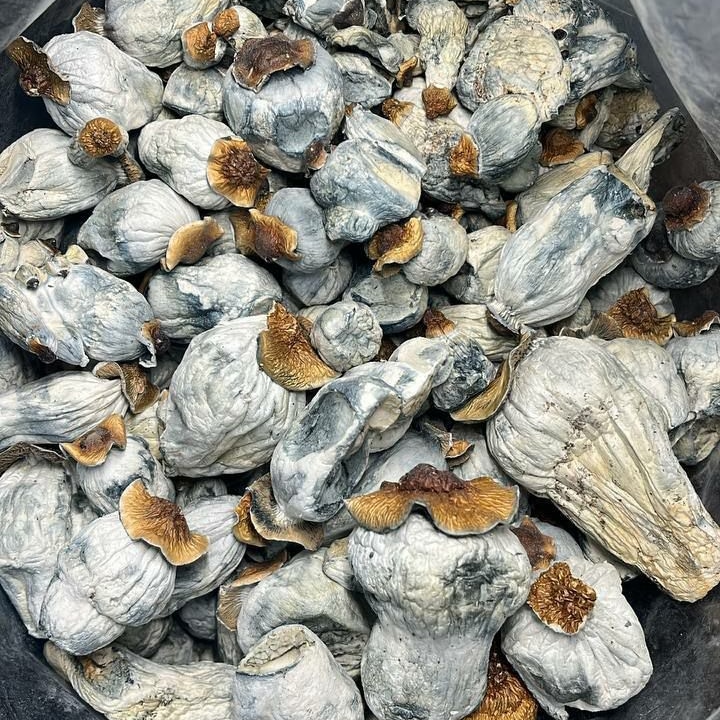
Where Can I Buy Psilocybin Mushroom Online Germany? Psilocybin mushrooms, commonly known as “magic mushrooms,” are naturally occurring fungi that contain the psychoactive compounds psilocybin and psilocin. These compounds interact primarily with serotonin receptors in the brain, producing changes in perception, mood, cognition, and consciousness. More than 200 species of mushrooms are known to contain psilocybin, distributed across several genera, including Psilocybe, Panaeolus, Gymnopilus, Pluteus, Inocybe, and Pholiotina. Among these, the genus Psilocybe is by far the most well-known and extensively studied.
Psilocybin mushrooms vary greatly in appearance, habitat, potency, and geographic distribution. While some species are widespread and commonly cultivated, others are rare, restricted to specific environments, or difficult to identify. Most psilocybin-containing mushrooms share a common characteristic: they often exhibit blue bruising when damaged, a reaction caused by the oxidation of psilocin. However, blue bruising alone is not sufficient for identification, as some non-psychoactive species may display similar discoloration. Where Can I Buy Psilocybin Mushroom Online Germany?
Understanding the different species is important from a scientific, ecological, and taxonomic perspective. Each species has unique physical characteristics, preferred growing conditions, and evolutionary adaptations. This article explores the most common and significant types of psilocybin mushrooms, highlighting their distinguishing features and natural habitats.
Psilocybe cubensis is the world’s most recognized and widely cultivated psilocybin mushroom. Its popularity stems from its relatively easy cultivation, broad global distribution, and moderate to high psilocybin content.
P. cubensis naturally grows in tropical and subtropical climates. It thrives on the dung of grazing animals, particularly cattle, and is commonly found after periods of heavy rainfall.
Natural distribution includes:
This species is highly adaptable and fruits readily under suitable environmental conditions. Numerous cultivated varieties have been selectively developed, including:
Although these varieties differ slightly in appearance and growth characteristics, they all belong to the same species.
The Liberty Cap is among the most widespread naturally occurring psilocybin mushrooms and has been documented throughout Europe for centuries.
Unlike many other species, Liberty Caps do not grow directly on dung. Instead, they grow in:
They are especially common in:
The Liberty Cap is adapted to cool climates and usually appears during autumn. Despite its small size, it is recognized for having relatively high concentrations of psilocybin compared with many larger species.
The Wavy Cap is famous for its unusually wavy cap margins and high psilocybin content.
Unlike dung-loving species, Wavy Caps prefer wood-based environments, including:
Common locations include:
This species thrives in cool autumn temperatures and often appears in urban landscaping, making it one of the more frequently encountered wood-loving psilocybin mushrooms.
Psilocybe azurescens is widely regarded as one of the most potent naturally occurring psilocybin mushroom species.
Native to the Pacific Northwest of North America, particularly coastal regions.
It prefers:
This species tolerates colder weather than many tropical mushrooms and fruits during late autumn.
This historically significant species was used ceremonially by Indigenous cultures in Mexico long before modern scientific discovery.
Found in:
Mostly distributed throughout:
P. mexicana was the species from which Albert Hofmann first isolated and identified psilocybin in 1958.
Known for producing underground structures called sclerotia, this species occupies a unique place among psilocybin mushrooms.
Native to sandy subtropical regions.
Originally discovered in:
It has since been documented elsewhere under suitable environmental conditions.
The formation of sclerotia enables the fungus to survive unfavorable environmental conditions by storing nutrients underground.
Sometimes called the “Landslide Mushroom,” this species frequently appears in disturbed soils.
Found in:
Typically grows after:
It prefers humid subtropical environments and often appears seasonally following heavy rains.
Named after the Zapotec people of Oaxaca, this species has cultural and ethnomycological significance.
Usually found in:
Distribution includes:
It thrives in consistently humid environments with abundant organic material.
A relatively uncommon species native to the Pacific Northwest.
Prefers:
This species is less frequently encountered than P. cyanescens but shares similar ecological preferences.
Commonly called the “Bottle Cap,” this species is native to North America’s western regions.
Found in:
It prefers cool, damp climates and fruits during autumn.
Although not a member of the Psilocybe genus, Panaeolus cyanescens is one of the best-known psilocybin-containing mushrooms.
Typically grows on:
Found in:
Its rapid growth and widespread tropical distribution distinguish it from many woodland species.
A colorful wood-decaying mushroom belonging to the genus Gymnopilus.
Found on:
Unlike Psilocybe, Gymnopilus species often have rusty-orange spore prints rather than purple-black ones.
One of the few psychoactive species within the genus Pluteus.
Typically found growing on:
It is considerably less common than most Psilocybe species.
Although species differ considerably, many psilocybin mushrooms share several identifiable traits:
However, none of these characteristics alone can reliably identify a mushroom as containing psilocybin.
Psilocybin mushrooms occupy diverse ecological niches.
Examples include:
These species grow primarily on the manure of grazing animals.
Examples include:
They colonize wood chips, mulch, and decaying logs.
Examples include:
These species are commonly found in meadows and pastures, often growing from soil enriched with decaying plant matter rather than directly from dung.
Examples include:
These inhabit moist forests rich in decomposing organic material.
Psilocybin mushrooms are found on every inhabited continent except Antarctica. Their distribution depends largely on climate and habitat.
Psilocybin mushrooms play an important ecological role as decomposers. They break down organic matter such as wood, grass roots, leaf litter, and animal manure, recycling nutrients back into ecosystems. By contributing to decomposition, they support soil fertility and nutrient cycling. Their underground mycelial networks also interact with soil microorganisms, influencing microbial communities and the breakdown of complex plant materials.
Correct identification of wild mushrooms is difficult, even for experienced foragers. Many poisonous species closely resemble psilocybin-containing mushrooms, and visual characteristics can vary with age, weather, and growing conditions. Features such as cap shape, spore color, bruising, habitat, and microscopic characteristics are often used together for identification. Because mistakes can have serious health consequences, field identification should never rely on a single characteristic.
Psilocybin mushrooms represent a remarkably diverse group of fungi, encompassing more than 200 known species across several genera. While Psilocybe cubensis remains the most familiar due to its global cultivation and widespread distribution, many other species—such as P. semilanceata, P. cyanescens, P. azurescens, P. mexicana, and Panaeolus cyanescens—illustrate the broad range of habitats, physical characteristics, and ecological adaptations found among psilocybin-producing fungi.
These mushrooms inhabit environments ranging from tropical cattle pastures and temperate grasslands to coastal dunes, woodlands, and cloud forests. Their distinguishing features, including cap shape, spore color, bruising reactions, and preferred substrates, reflect evolutionary adaptations to different ecosystems. Beyond their psychoactive chemistry, they serve important ecological functions by decomposing organic material and recycling nutrients within natural habitats.
From a scientific perspective, studying the diversity of psilocybin mushrooms enhances understanding of fungal taxonomy, ecology, biochemistry, and evolution. Continued research into these species is expanding knowledge of their genetics, geographic distribution, and ecological relationships, making them an increasingly important subject in modern mycology.
