Address
304 North Cardinal St.
Dorchester Center, MA 02124
Work Hours
Monday to Friday: 7AM - 7PM
Weekend: 10AM - 5PM
Address
304 North Cardinal St.
Dorchester Center, MA 02124
Work Hours
Monday to Friday: 7AM - 7PM
Weekend: 10AM - 5PM

Europe Legit Psychedelic Shop
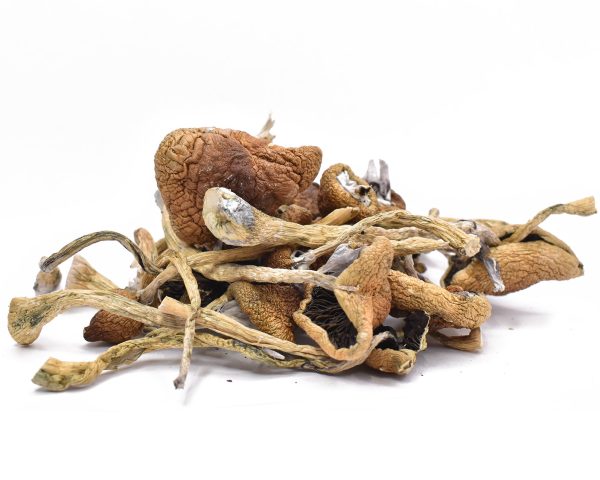
Where to Buy Psychedelic Mushroom Online Hungary?Psilocybin, the primary psychoactive compound found in certain species of mushrooms, has emerged as one of the most studied psychedelic substances in modern neuroscience. Once largely dismissed due to legal restrictions and social stigma, psilocybin is now at the center of rigorous scientific research investigating its potential to treat depression, anxiety, post-traumatic stress disorder (PTSD), substance use disorders, and other mental health conditions. One of the most intriguing aspects of this research is the possibility that psilocybin promotes neuroplasticity—the brain’s remarkable ability to reorganize, adapt, and form new neural connections.
Neuroplasticity is fundamental to learning, memory, emotional regulation, and recovery from neurological injury. Scientists increasingly believe that many psychiatric disorders involve reduced neural flexibility, where patterns of thinking and behavior become rigid and self-reinforcing. Psilocybin may temporarily increase the brain’s capacity to reorganize these patterns, creating a “window of plasticity” during which psychotherapy and positive behavioral changes may become more effective.
Although enthusiasm surrounding psilocybin has grown rapidly, the science remains an evolving field. Many findings come from laboratory animals, while human clinical studies are relatively small and conducted under highly controlled conditions. Nevertheless, converging evidence from molecular biology, neuroimaging, psychology, and clinical medicine suggests that psilocybin may influence neuroplasticity through several interconnected mechanisms. Where to Buy Psychedelic Mushroom Online Hungary?
Neuroplasticity refers to the nervous system’s ability to modify its structure and function throughout life. Contrary to the once-common belief that the adult brain is fixed after childhood, research has demonstrated that neural circuits continuously adapt in response to experiences, learning, injury, and environmental changes.
Neuroplasticity occurs through several biological processes:
Healthy neuroplasticity allows individuals to:
Conversely, impaired neuroplasticity has been associated with numerous disorders including major depression, addiction, obsessive-compulsive disorder (OCD), Alzheimer’s disease, and chronic stress.
Psilocybin is a naturally occurring psychedelic compound produced by more than 200 species of mushrooms belonging primarily to the genus Psilocybe. After ingestion, psilocybin is rapidly converted into psilocin, the pharmacologically active molecule.
Psilocin primarily activates serotonin 5-HT2A receptors located throughout the cerebral cortex, especially in regions involved in:
Unlike many psychiatric medications that require weeks before noticeable improvement, psilocybin often produces rapid psychological effects lasting approximately 4–6 hours, while potential therapeutic benefits may persist for weeks or months in some research participants.
The serotonin system regulates numerous aspects of brain function including mood, cognition, learning, and emotional flexibility.
The 5-HT2A receptor plays a particularly important role in cortical plasticity.
Activation of this receptor leads to:
These molecular events create conditions favorable for neural remodeling.
Researchers believe this receptor serves as the initial trigger that eventually produces many of psilocybin’s downstream plasticity effects.
Current evidence suggests several biological mechanisms contribute.
BDNF is one of the most important proteins involved in brain health.
It promotes:
Several animal studies have shown that psychedelic compounds increase BDNF expression.
Higher BDNF levels generally support stronger synaptic plasticity.
Some human studies report temporary increases in circulating BDNF following psilocybin administration, although findings remain mixed and more research is needed to determine the consistency and clinical significance of this effect.
The mammalian target of rapamycin (mTOR) pathway regulates cellular growth and protein synthesis.
Activation of mTOR supports:
Research suggests psychedelic compounds may activate mTOR signaling, similarly to the rapid-acting antidepressant ketamine.
This pathway helps explain why structural changes in neurons may occur relatively quickly after psychedelic exposure.
Synaptogenesis refers to the formation of new synaptic connections between neurons.
Laboratory experiments have shown psychedelic compounds can:
Some studies describe psychedelics as “psychoplastogens” because they appear to stimulate structural remodeling in neurons.
However, much of this evidence comes from cell cultures and animal models, and researchers are still determining how directly these findings translate to humans.
Dendritic spines are tiny protrusions on neurons where synapses form.
Greater dendritic spine density is associated with:
Animal research demonstrates increased dendritic spine growth after psychedelic administration.
These changes may persist for weeks after a single dose.
Modern neuroimaging has transformed understanding of psilocybin’s effects.
Rather than simply activating isolated brain regions, psilocybin appears to reorganize communication across large-scale brain networks.
The most studied networks include:
The DMN is active during:
Depression is often associated with excessive DMN activity.
During psilocybin experiences:
Researchers propose this temporary disruption allows rigid patterns of thought to become more flexible, potentially supporting lasting psychological change.
Functional MRI studies reveal that psilocybin increases communication between brain regions that rarely interact under ordinary conditions.
This phenomenon has been described as increased brain entropy or greater flexibility in network organization.
Such temporary reorganization may underlie altered perception, novel insights, and enhanced cognitive flexibility reported during psychedelic experiences.
Animal models provide strong evidence for structural neuroplasticity.
Researchers have observed:
Some changes remained detectable for several weeks after treatment.
Animal studies also show improvements in learning and behavioral flexibility following psychedelic exposure.
However, caution is necessary because animal findings cannot automatically be generalized to humans.
Human studies rely primarily on:
Findings include:
Some imaging studies suggest that certain changes in network organization may persist for days or weeks after treatment, though longer-term effects are still being investigated.
Major depressive disorder is characterized by:
Many researchers believe impaired neuroplasticity contributes to depression.
Clinical trials have shown that psilocybin administered alongside structured psychological support can produce rapid reductions in depressive symptoms in some participants, with benefits sometimes lasting several weeks or months. Participants often report feeling less mentally “stuck” and more emotionally open.
These improvements may arise from a combination of biological plasticity and meaningful psychological experiences rather than neuroplasticity alone.
Patients with life-threatening illnesses frequently experience severe anxiety and depression.
Controlled clinical studies have found that a single supervised psilocybin session, combined with psychotherapy, can substantially reduce existential distress in some patients.
Possible mechanisms include:
Many participants describe lasting shifts in perspective that continue long after the acute drug effects have ended.
Addiction involves deeply ingrained neural pathways related to reward, craving, and compulsive behavior.
Neuroplasticity may help weaken maladaptive habits while strengthening healthier behavioral patterns.
Preliminary studies have investigated psilocybin-assisted therapy for:
Early findings suggest promising reductions in substance use for some participants, but larger randomized controlled trials are needed before firm conclusions can be drawn.
Researchers believe that increased plasticity, combined with intensive psychotherapy, may help people establish new patterns of behavior.
When memories are recalled, they briefly become modifiable before being stored again.
This process is known as memory reconsolidation.
Some scientists hypothesize that psilocybin may facilitate the updating of emotionally significant memories, allowing traumatic or maladaptive associations to be processed differently.
This hypothesis is still under investigation, particularly in relation to PTSD and trauma-focused therapy.
Plasticity is not limited to structural changes.
Psilocybin may also promote emotional learning by:
These changes may make psychotherapy more effective because patients can engage with difficult emotions in new ways.
One emerging hypothesis is that psychedelics may temporarily reopen “critical periods” of heightened learning and adaptability that are common during early development.
During this window, individuals may become more receptive to new experiences and behavioral change.
While animal research supports this idea, evidence in humans remains preliminary and researchers are actively studying whether such critical-period-like effects occur after psilocybin.
Several psychiatric treatments appear to influence neuroplasticity through different mechanisms.
Selective serotonin reuptake inhibitors (SSRIs) gradually increase serotonin signaling and may enhance plasticity over weeks.
Ketamine rapidly promotes synaptic growth through glutamate signaling and mTOR activation.
Exercise increases BDNF and supports widespread brain health.
Psychotherapy changes neural circuits through learning and repeated practice.
Psilocybin differs in that it appears to combine rapid receptor activation, large-scale changes in brain network dynamics, and profound subjective experiences that may reinforce lasting behavioral change when integrated through therapy.
Despite encouraging findings, several important limitations remain.
Many clinical studies include relatively few participants, making it difficult to generalize results.
Although some benefits appear durable, many studies follow participants for only weeks or months.
Long-term structural brain changes remain uncertain.
Research participants receive extensive preparation, psychological support, and post-session integration.
These conditions differ substantially from unsupervised recreational use.
Responses vary widely.
Factors influencing outcomes include:
Direct measurement of neuroplasticity in living humans remains challenging.
Researchers rely on indirect markers including:
Each method has limitations, and no single measure fully captures plasticity.
Psilocybin is generally considered to have low physiological toxicity in controlled research settings, but it is not risk-free.
Potential adverse effects include:
It may also precipitate prolonged psychiatric symptoms in susceptible individuals, particularly those with a personal or family history of psychotic disorders or bipolar disorder. For this reason, modern clinical trials use careful screening, trained facilitators, and medical oversight.
Self-treatment with psilocybin outside regulated clinical or research settings carries additional risks, including uncertain mushroom identification, variable dosing, and the absence of professional support. Where to Buy Psychedelic Mushroom Online Hungary?
Researchers are pursuing several important questions:
Advances in neuroimaging, molecular neuroscience, and precision psychiatry are expected to provide clearer answers over the coming years.
Research over the past two decades has transformed scientific understanding of psilocybin and its effects on the brain. Evidence from cellular studies, animal experiments, neuroimaging, and early clinical trials suggests that psilocybin can influence multiple biological processes associated with neuroplasticity, including increased synaptic growth, dendritic remodeling, modulation of neurotrophic signaling, and temporary reorganization of large-scale brain networks. These changes may help explain why psilocybin-assisted therapy has shown promise for conditions such as depression, end-of-life anxiety, and certain substance use disorders. Where to Buy Psychedelic Mushroom Online Hungary?
At the same time, the evidence should be interpreted with appropriate caution. Many mechanistic findings come from preclinical research, and human studies are still relatively small. It is also difficult to separate the direct biological effects of psilocybin from the contributions of psychotherapy, the therapeutic setting, and the subjective psychological experience itself. Current evidence supports the view that psilocybin may create a temporary period of increased neural and psychological flexibility, but this flexibility appears to be most beneficial when paired with structured therapeutic support rather than viewed as a standalone cure.
Overall, the scientific consensus is that psilocybin represents a promising avenue for research into brain plasticity and mental health treatment, but important questions remain regarding optimal dosing, long-term safety, durability of effects, and which individuals are most likely to benefit. As larger and more rigorous clinical trials are completed, researchers will gain a clearer understanding of how psilocybin-induced neuroplasticity can be translated into safe, effective, and evidence-based therapies.
