Address
304 North Cardinal St.
Dorchester Center, MA 02124
Work Hours
Monday to Friday: 7AM - 7PM
Weekend: 10AM - 5PM
Address
304 North Cardinal St.
Dorchester Center, MA 02124
Work Hours
Monday to Friday: 7AM - 7PM
Weekend: 10AM - 5PM

Europe Legit Psychedelic Shop
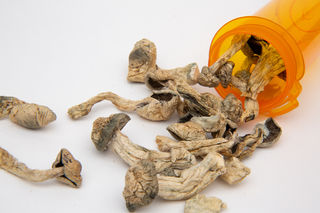
Where to Buy Psychedelic Mushroom Online Netherlands? Psilocybin is a naturally occurring psychedelic compound found in over 200 species of mushrooms belonging primarily to the Psilocybe genus, although it is also present in several related genera such as Panaeolus, Gymnopilus, and Pluteus. For centuries, indigenous cultures in Central and South America have used psilocybin-containing mushrooms in spiritual, religious, and healing ceremonies. In modern neuroscience, psilocybin has emerged as one of the most extensively studied psychedelic compounds due to its unique ability to temporarily alter perception, cognition, emotion, and consciousness while also demonstrating promising therapeutic potential for various psychiatric disorders.
Unlike many recreational drugs that primarily stimulate dopamine release, psilocybin works mainly through the serotonin system, particularly by activating a subtype of serotonin receptor known as the 5-HT2A receptor. This interaction triggers widespread changes in brain activity, communication between neural networks, and patterns of information processing. The resulting effects include altered sensory perception, intensified emotions, changes in self-awareness, mystical-type experiences, and enhanced psychological flexibility.
Understanding how psilocybin interacts with the human brain requires examining its journey from ingestion to metabolism, receptor binding, neural network modulation, neurotransmitter interactions, cognitive effects, emotional processing, neuroplasticity, and therapeutic mechanisms. Modern neuroimaging techniques such as functional magnetic resonance imaging (fMRI), electroencephalography (EEG), magnetoencephalography (MEG), and positron emission tomography (PET) have significantly advanced our understanding of these processes.
Psilocybin itself is not the compound that directly affects the brain. Instead, it acts as a prodrug, meaning it must first be converted into its active form.
After oral ingestion, psilocybin is rapidly absorbed through the gastrointestinal tract. Enzymes called alkaline phosphatases remove its phosphate group, converting psilocybin into psilocin, the pharmacologically active molecule.
This conversion occurs primarily in:
Psilocin is structurally similar to serotonin (5-hydroxytryptamine or 5-HT), one of the brain’s major neurotransmitters involved in mood regulation, cognition, appetite, sleep, learning, and emotional processing.
Because of this structural similarity, psilocin can bind to many serotonin receptors throughout the brain.
Peak blood concentrations generally occur within 60–90 minutes after ingestion, although onset usually begins within 20–40 minutes depending on dosage, metabolism, and whether the stomach is empty.
One of psilocin’s most important characteristics is its ability to cross the blood-brain barrier.
The blood-brain barrier protects the central nervous system from harmful substances while allowing certain molecules to pass.
Psilocin is sufficiently lipid-soluble to enter brain tissue efficiently.
Once inside the brain, it distributes widely throughout cortical and subcortical regions rather than targeting only one area.
Brain regions particularly affected include:
These regions collectively regulate:
The hallmark of psilocin’s pharmacology is activation of serotonin receptors.
Although psilocin interacts with several serotonin receptor subtypes—including 5-HT1A, 5-HT2B, and 5-HT2C—the 5-HT2A receptor is considered the principal mediator of its psychedelic effects.
These receptors are densely concentrated in layer V pyramidal neurons of the cerebral cortex.
Activation of these neurons produces widespread excitation across cortical networks.
Research has demonstrated that blocking 5-HT2A receptors with antagonists such as ketanserin largely abolishes psilocybin’s characteristic psychological effects, confirming the central role of this receptor.
When psilocin binds to 5-HT2A receptors, intracellular signaling pathways become activated.
These include:
The increased glutamate release excites neighboring neurons and enhances communication between distant cortical regions.
This creates a brain state characterized by:
Rather than stimulating one isolated brain region, psilocybin reorganizes communication across the entire cortex.
Perhaps the most famous discovery in psychedelic neuroscience concerns the Default Mode Network (DMN).
The DMN consists primarily of:
The DMN becomes active during:
Under normal conditions, the DMN acts as a central hub coordinating internal thought.
During psilocybin administration, functional MRI consistently demonstrates reduced synchronization within the DMN.
This temporary reduction is associated with:
Many participants describe feeling less constrained by habitual patterns of thinking.
One of the most remarkable effects of psilocybin is increased communication between brain regions that rarely interact under normal conditions.
Normally, the brain is organized into specialized functional networks.
Psilocybin weakens these boundaries.
Neuroimaging reveals increased connectivity between:
This expanded communication may explain:
The brain temporarily becomes more globally integrated.
One influential explanation is the Entropic Brain Hypothesis.
According to this theory:
Normal waking consciousness represents a relatively ordered brain state.
Psilocybin increases neural entropy, meaning brain activity becomes more variable, flexible, and less constrained.
Higher entropy allows:
This temporary increase in entropy may help patients escape maladaptive thinking patterns associated with depression or addiction.
Psilocybin profoundly changes sensory processing.
Visual changes include:
Auditory perception often becomes:
Touch may become:
These changes arise because sensory regions communicate differently with association cortices.
The brain interprets sensory information less predictively and more openly.
Modern neuroscience increasingly views perception as prediction.
Normally, the brain continuously predicts incoming sensory information.
Only prediction errors receive detailed processing.
Psilocybin appears to weaken these top-down predictions.
As a result:
This framework helps explain why familiar environments can appear entirely new.
Psilocybin strongly influences emotional circuits.
The amygdala plays a major role in fear processing.
Studies show psilocybin often reduces excessive amygdala responses to negative emotional stimuli while increasing responsiveness to positive emotional experiences.
Users frequently report:
Rather than suppressing emotions, psilocybin often amplifies emotional awareness while reducing defensive avoidance.
The hippocampus supports memory formation and autobiographical recollection.
Psilocybin alters hippocampal communication with cortical regions.
This can produce:
Many participants revisit emotionally important memories from new perspectives.
One of psilocybin’s most unique psychological effects is ego dissolution.
During ego dissolution:
Neuroscientists associate this experience with decreased DMN integrity and increased whole-brain connectivity.
Many participants describe the experience as among the most meaningful events of their lives.
Recent research suggests psilocybin promotes neuroplasticity.
Neuroplasticity refers to the brain’s ability to reorganize neural connections.
Laboratory studies indicate psilocin may increase:
These effects appear partly mediated through:
Enhanced neuroplasticity may support long-lasting psychological improvements when combined with psychotherapy.
Although serotonin receptors are primary targets, psilocybin indirectly influences multiple neurotransmitter systems.
These include:
Glutamate release increases significantly.
This enhances cortical communication.
Moderate secondary increases occur in dopamine transmission.
These may contribute to motivation and emotional salience.
Changes in inhibitory signaling alter cortical balance.
Heightened arousal contributes to increased alertness.
Together these neurotransmitter changes produce the characteristic psychedelic state.
EEG studies reveal decreased alpha oscillations during psilocybin administration.
Alpha rhythms normally reflect organized cortical inhibition.
Reduced alpha power corresponds with:
Gamma oscillations sometimes increase during peak mystical experiences.
Psilocybin is being investigated as an adjunct to psychotherapy for several mental health conditions. Clinical trials have shown promising results for treatment-resistant depression, major depressive disorder, anxiety associated with life-threatening illness, and certain substance use disorders. These studies are typically conducted in carefully controlled settings with medical screening, psychological preparation, supervised dosing, and post-session integration.
Several mechanisms may contribute to its therapeutic effects:
Current evidence suggests that the psychological context (“set and setting”) and structured psychotherapy play a major role in determining both the safety and the durability of therapeutic outcomes.
Despite its therapeutic promise, psilocybin is not without risks.
Potential adverse effects include:
Although uncommon in research settings with careful screening, psilocybin can precipitate prolonged psychological difficulties in susceptible individuals. It is generally avoided in people with a personal or strong family history of psychotic disorders such as schizophrenia or bipolar I disorder because it may increase the risk of triggering psychosis or mania.
Psilocybin should also not be combined casually with other psychoactive substances, and anyone considering its use for mental health reasons should do so only within appropriate legal and medical frameworks where available.
Psilocybin interacts with the human brain through a complex series of neurobiological processes that begin with its conversion into psilocin and culminate in widespread changes in brain communication. By primarily activating 5-HT2A serotonin receptors, psilocin increases cortical excitation, enhances glutamate signaling, reduces the dominance of the Default Mode Network, and promotes greater connectivity among normally segregated brain regions. These neural changes alter perception, emotion, memory, and self-awareness, producing the characteristic psychedelic experience.
Modern neuroimaging supports the idea that psilocybin temporarily shifts the brain into a more flexible and integrated state, allowing patterns of thought and behavior to become less rigid. This has made the compound an important subject of clinical research for conditions such as depression, anxiety, and addiction. Evidence also suggests that psilocybin may promote neuroplasticity, potentially supporting lasting psychological change when combined with structured psychotherapy.
However, psilocybin is not a universal treatment or a risk-free substance. Its effects vary substantially depending on dose, individual biology, mental state, and environment, and it may be harmful for some individuals. While ongoing research continues to clarify its mechanisms and therapeutic potential, current scientific evidence indicates that psilocybin’s most significant effects arise from its ability to reorganize large-scale brain network activity, temporarily increasing the brain’s capacity for flexible information processing and new perspectives on thoughts, emotions, and experiences.
